By: Ashley Rogers, Former NJSOC Education Intern
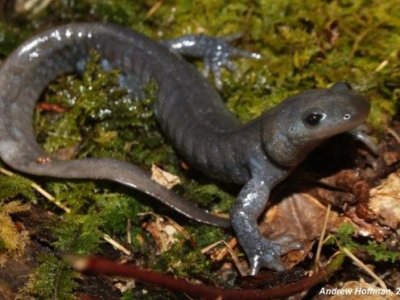
This month’s at-risk species is the Jefferson Salamander (Ambystoma jeffersonianum). The elusive amphibian overwinters in deciduous forested areas, while it breeds in vernal pools, which are temporary bodies of water that dry up in the summer. They are usually found under logs and other ground-lying objects, however, they are a rare find unless you are looking to observe them on breeding nights in the late winter or early spring. Since Jefferson Salamanders have such strong site fidelity, they sometimes remain within a mile radius of their breeding areas. In New Jersey, they can be found in the northern region of the state, including in Sussex, Warren, Hunterdon, Passaic, and Bergen Counties.
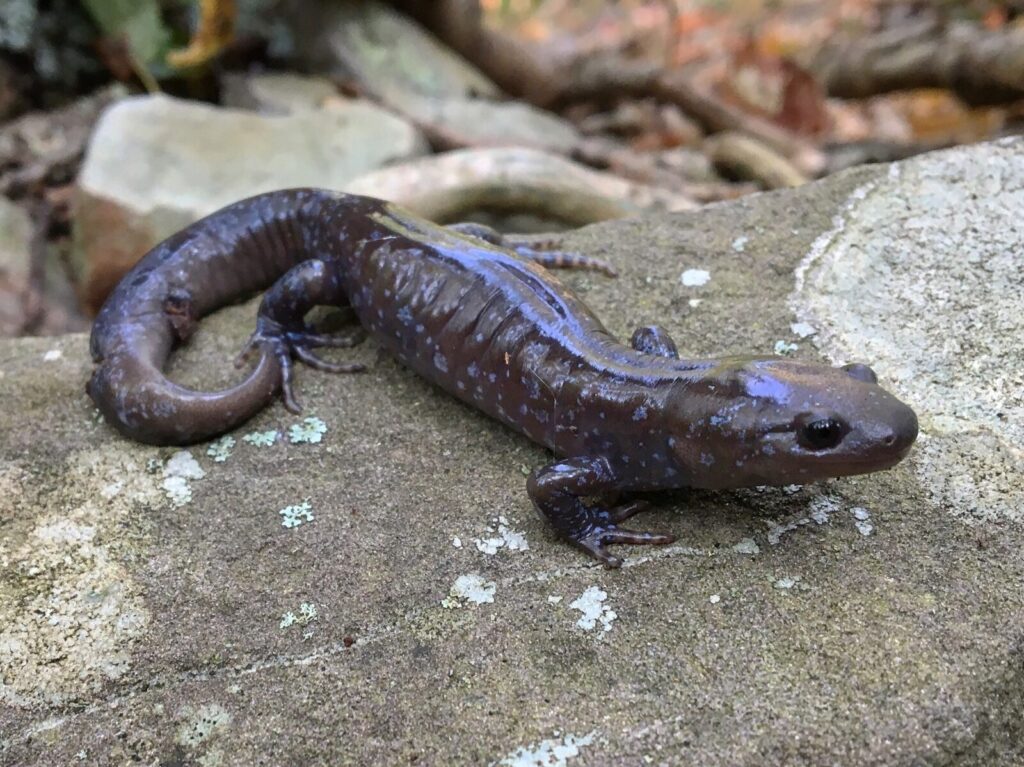
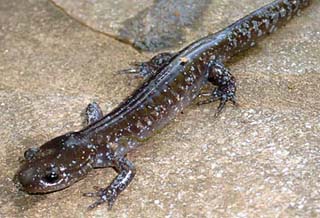
The species can be identified by its 4 1/4”-8 1/4” slender body, that is dark brown or gray in color with a lighter underside. The limbs of Jefferson Salamanders can be marked with bluish-gray speckles that tend to be brighter on younger individuals, but can be faded on older individuals. Their diet includes a variety of worms, insects, snails and slugs, while their larvae often feed on plankton and aquatic insects. This salamander also engages in a variety of defense mechanisms, ranging from biting the predator to undulating its body and even detaching its tail in the case of danger. Jefferson Salamanders are believed to live approximately six years in the wild.
In NJ, Jefferson Salamanders are currently listed as a species of special concern. This is because of vehicular collisions, habitat degradation, and water acidification. This species has specialized habitat requirements because of its strong fidelity to breeding ponds, making them sensitive to minor quality changes in its habitat. To address these concerns, promote the establishment of habitat corridors, advocate for heightened protections for vernal pools, and limit pesticide usage. For more information about this salamander and their conservation, visit the Conserve Wildlife Foundation of New Jersey and Animal Diversity Web.
References:
https://animaldiversity.org/accounts/Ambystoma_jeffersonianum
https://conservewildlifenj.org/?species=ambystoma-jeffersonianum
https://www.nj.gov/dep/fgw/ensp/pdf/species/jeffereson_salamander.pdf